Tag: writing

  • Things in life you (probably) take for granted everyday

    Things in life you (probably) take for granted everyday

    Before I was even born, humans had created some of the most important, life changing inventions, from the car (1886), the lightbulb (1879), penicillin (1928), to the internet (1983), the polio vaccine (1955) and, dare I say it, plastic (1907). Yup, these are just some of the many clever ideas which have changed our world.

    But what about the inventions that are overlooked and less in your face? I can guarantee there’s at least one or two you take for granted everyday – I know I do!

    Roads

    We don’t have to dig out the spades when we head out to the supermarket (get it, dig out?). You don’t have to cut your way through bramble and bush. You don’t even have to think twice when you’re pulling out of your driveway and heading to work. All that back breaking work has literally been done for you. Sure, potholes suck and rain is becoming a bit more of an issue with climate change, BUT you must admit that roads are incredible. Next time you go for a drive or you get stuck in traffic, be grateful that someone in Mesopotamia 6,000 years ago decided to lay down a path – and that the trend caught on.

    A road in a modern city by evening_tao on freepik

    The indoor toilet

    Need I say more?? Did you know that Thomas Crapper wasn’t actually the first person to invent the flush toilet? As disappointing as it is, Sir John Harrington actually beat him to it in the 16th century. Despite this, most toilets weren’t inside. Roughly 100 years ago, most UK houses didn’t have an indoor toilet. Indoor plumbing is pretty recent and still not the status quo across the world. Think about it. You don’t have to brave the elements for a midnight pee. You don’t need to put on shoes or light a lamp and look for rats outside. Indoor toilets are the sh*t.
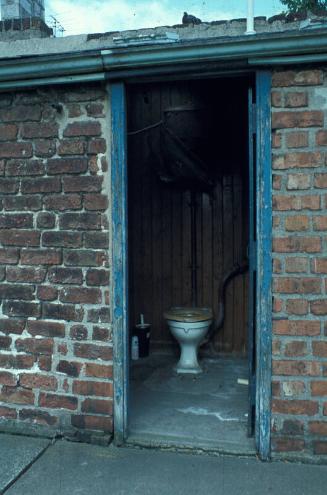
    An outside toilet (1978-1979), Aberdeen Archives, Gallery & Museum

    Toothpaste

    9 out of 10 dentists will agree that toothpaste is pretty awesome. I shudder to think about how bad everyone’s breath would stink and just how many of us would lose teeth and need surgery. A breath mint will only get you so far.

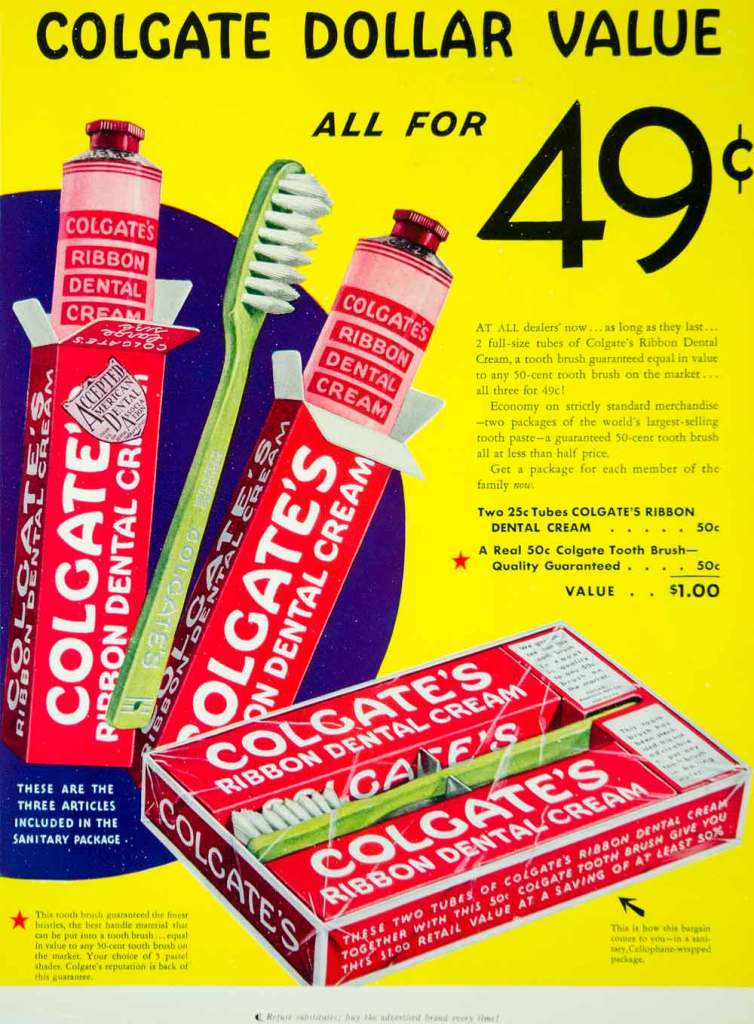
    Oral hygiene has an interesting history. Most cultures had their own toothpaste remedies, but it didn’t come out of a tube. The Ancient Egyptians, for example, mixed oxen hooves, pumice, myrrh, egg shells and just a splash of water. That did the trick. People of Ancient Greece, Rome, China, India – different variations of toothpaste existed long before modern toothpaste. Doesn’t say people’s teeth were in a good state though. Did you know Tudor Queen Elizabeth brushed her teeth with honey? She hardly had any teeth in the end. Mr Peabody and Colgate, I owe you one.
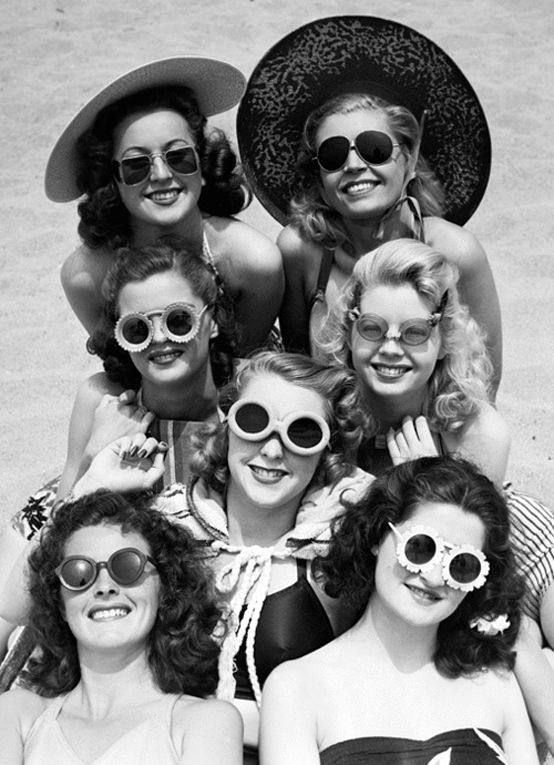
    Sunglasses

    Sunglasses didn’t actually do what they said on the tin for many years. Sure, they were fashionable and protected people’s eyes from Michael Bay-esque lens flares, but apart from that, they had no sun protection whatsoever. It wasn’t until the 1930s that protection from UV rays was integrated into the design of sunglasses. Edwin. H. Land invented polarised lenses in the late 1930s and Ray Ban’s Aviator sunglasses became renowned for their utility and style during World War II. Where would my sensitive blue eyes be on those hazy, cloudy days without my sunglasses?
    The Barcode

    Imagine carting your big shop up to the checkout. The checkout lady stares at the heaped trolley and gives a sigh as you start loading your stuff onto the checkout belt. She picks up a box of cereal and manually types in the number on the back. She does the same thing for the chicken breasts, the chocolate, the washing powder, the pasta sauce. This monotonous routine continues and, by the time she’s reached the bottom of the trolley, the chicken’s gone off.

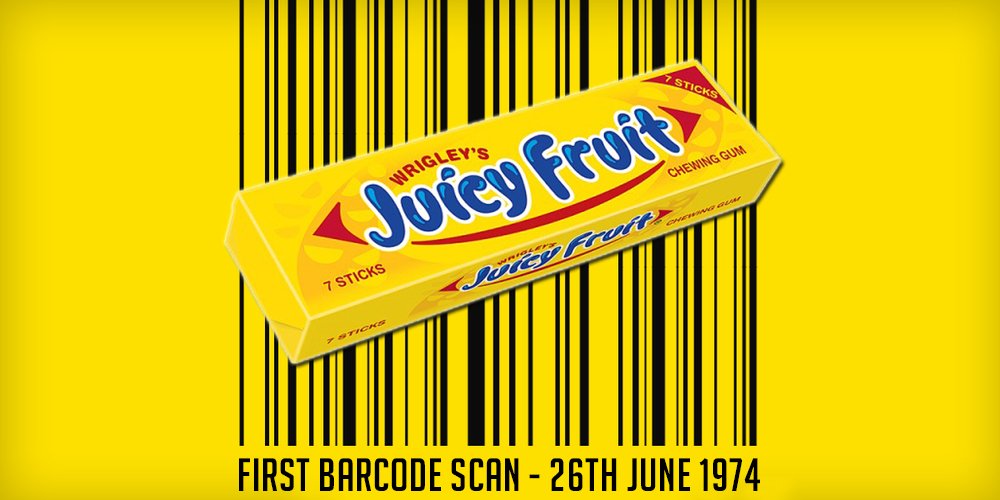
    Yup, those little black lines are a godsend. The barcode revolutionised shopping and stock take forever. Norman Joseph Woodland and Bernard Silver invented the very first barcode in 1952. However, the barcode was ahead of its time and when technology finally caught up, the barcode was integrated into supermarket software. The first barcode scanned at a checkout was a packet of Wrigley’s Juicy Fruit in Ohio, 1974. The rest is history!
    Aren’t you just bursting with gratitude? There’s definitely more I could write about!! What other inventions would make your list? Let me know below! 🙂

    Are you following @rebekah_writes_stuff on instagram?
  • Dragons now – what would it be like?

    Dragons now – what would it be like?

    There’s a reason dragons exist in your fantasy storybooks and myths of yore. They were enormous, there was tonnes of space and nobody had invented the bazooka yet. Yup, dragons just don’t fit in with the 21st century because everybody has a phone, spacious green pastures are few-and-far-between and the army have a lot more than bazookas now at their disposal.

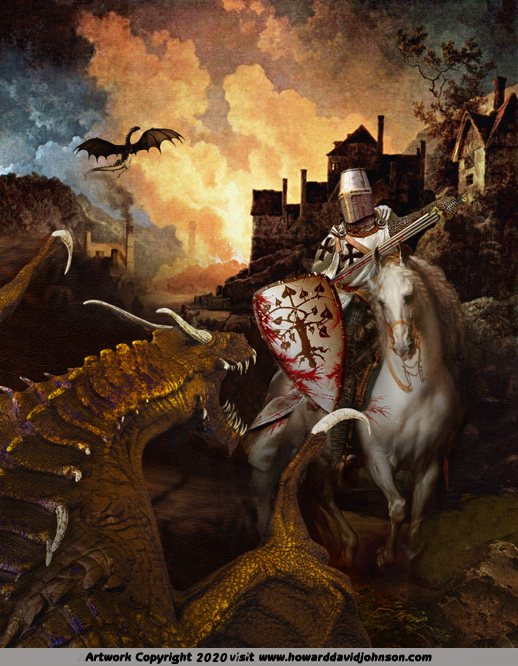
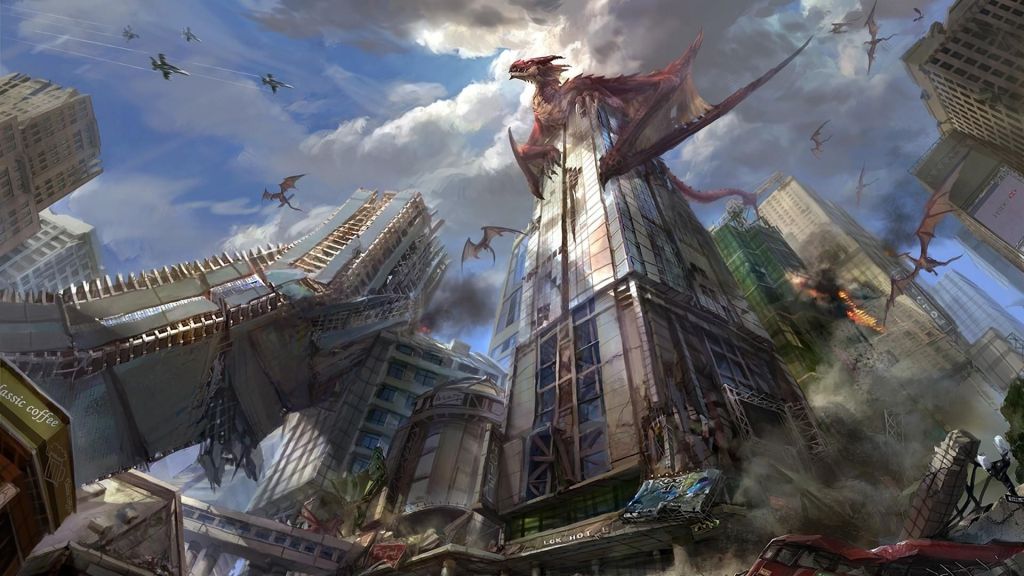
    However, if we suspend our disbelief for just a few seconds … what would it be like if dragons did live alongside humans in the 21st century? In our bustling metropolises, rural villages and our fast food restaurants. Towering over our houses and hopping around night markets. Here are my predictions:

    1. Dragons would make incredibly popular (if not terrible) pets.

    Not all dragons are the same. Think of them like scaly dogs. Where some are tall and broad, others are small and handbag size. You know for a fact that there would be a market for lap-size dragons and ones you can fit in your purse. Instagram would go off. Would dragons take in the footsteps of dogs? Most likely – but forget fur and feathers. Dragons are not only hypoallergenic, but they don’t shed and they can fly. Instead of going for a daily morning walk, you’d be off for your daily swoop. Yup, pet dragons would protect livestock, jump for a frisbee and sit up and watch TV with you, all in exchange for a large, meaty treat.

    2. There would be fire. Lots and lots of fire.

    There is then, of course, the other side that comes with trying to co-exist with dragons. Sure, some will sit on your lap and put your fire on for you, but some will eat you. News headlines would be filled with constant reminders of how lethal dragons can be. Firestorm engulfs The Amazon as state of emergency continues. Ice dragon continues to freeze New York in what is being known as its longest winter blast in history. Dragons are eating the African elephant to extinction. You get the gist.

    Some dragons will destroy your newly built village a week after it is finished. Some will definitely attack aeroplanes and boats, and some will simply stand on you because they’re too big to remember where their feet are. How does one navigate driving down the motorway if they decide to go for a walk? Forget settling down. We’d constantly be running, relocating and rebuilding. Face it, there is no upside from a dragon having an off day. Just have your go-bag ready and invest in the fire department – if they haven’t already burnt it down.

    3. Dragon eggs would be sold on the black market for millions.

    Dragon eggs would be a hot commodity and one that people would pay a ridiculous amount of money for. Similar to the endangered/exotic animal trade, I imagine dragons and their eggs would be stolen and sold around the world. Why? For their power, rarity and popularity.

    4. Dragons would be weaponised.

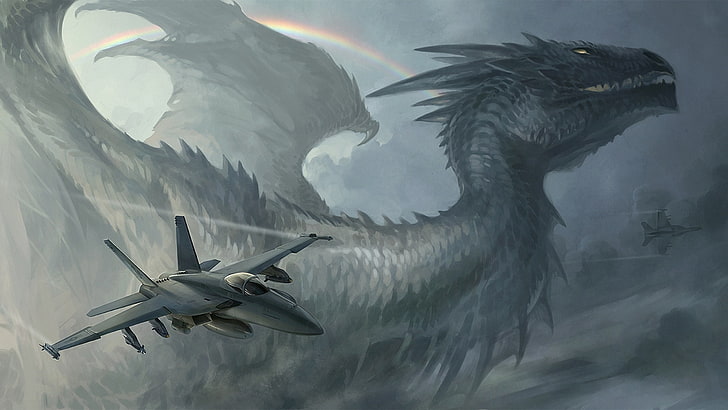
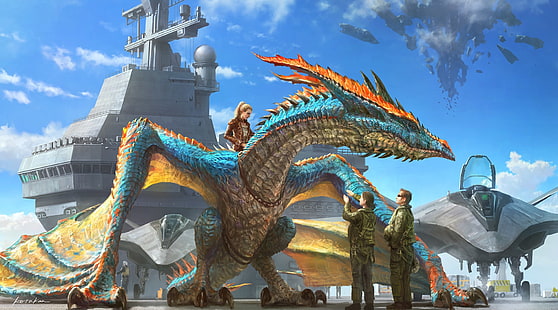
    Forget dogfights. Wars in the skies would be fought with enormous, toothy beasts with humans at the reigns. Dragons would be utilised as protection for high ranking government officials and countries. They’d be trained to fight in the airforce and the army. They would receive medals and have their photos taken, like the police with their K-9 squad. Whether they’d replace tanks and fighter jets (or simply eat them all) remains to be seen.

    Some dragons, like Smaug, had a hide so tough it couldn’t be pierced by an ordinary weapon. It’s fair to say with how much DNA research is advancing, and the popularity of the Jurassic Park movies, making super dragons with impenetrable skin and multiple breaths, would only take pushing a few extra buttons.

    The idea of a dragon being used (and feared) for its strength definitely feels more fantastical, more medieval. Like the stories we are used to seeing. Nations attacking one another with their own dragons … this would absolutely happen.

    The world loves dragons

    Dragons have a firm place in history, mythology, culture and fiction. Humans are fascinated by their strength, power and personality, so much so, that dragons continue to be present in pop culture. Whether or not they’d co-exist with humans is another story. Happy year of the dragon everyone!

    What do you think of my predictions? Also, tell me who’s your favourite dragon? Are you year of the dragon?? I’d love to know in the comments below!!

    *I don’t own the images btw!

  • I rewatched Mickey’s Once Upon a Christmas

    I rewatched Mickey’s Once Upon a Christmas

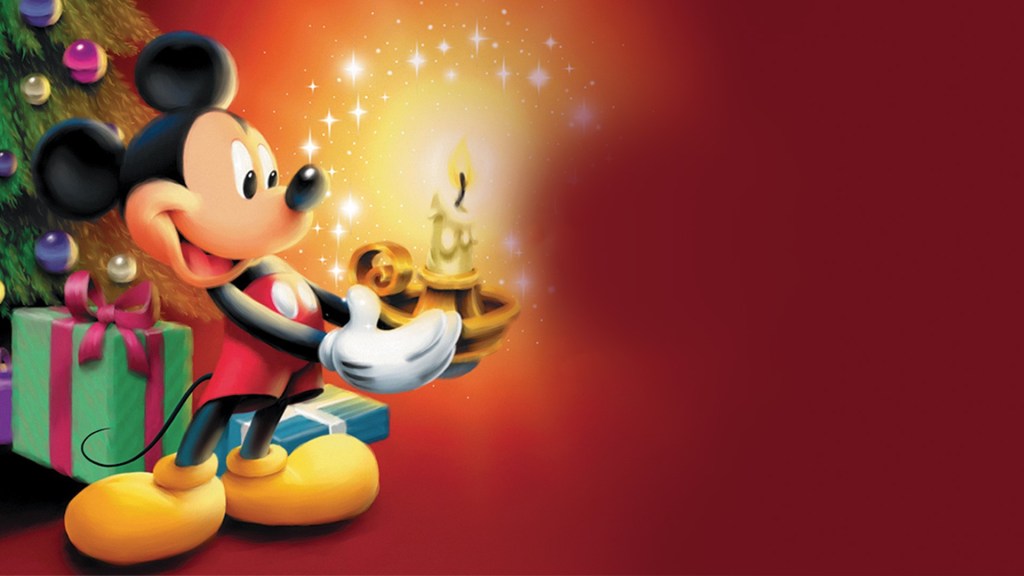
    Mickey’s Once Upon a Christmas (1999) is a nostalgic Disney classic. For those of you who’ve never seen it, or who last watched it on a VHS, the film is separated into three chunks, each with a different Christmas meaning.

    The first two stories ended thoughtfully with classic Christmas messages spread throughout, but it’s Mickey’s story which took me by surprise. Before I unpack Mickey’s film, here is a quick summary of the first two:

    Donald Duck: Stuck on Christmas

    Story one is about Huey, Dewey and Louie and how they wish that Christmas could be everyday. In true Disney fashion, their wish comes true and sure enough, Christmas is yesterday, today, tomorrow and forever. The novelty soon wears off and, eventually, they discover that Christmas isn’t solely about receiving presents. It’s about family and being present. Time magically restores itself and that’s that. I’d rate the moral of the story a solid 4/5.

    A Very Goofy Christmas

    Story two follows Goofy’s son Max. Their neighbour Pete (the antagonist) puts a dampener on Max’s Christmas when he postulates that Santa couldn’t possibly exist. Naturally, this dulls Max’s Christmas spirit and his love of Santa. Goofy works tirelessly to keep Max’s Christmas spirit alive, to the point where he maxes out his own Christmas joy. In the end, Max realises he doesn’t need proof and that it’s more about belief, being with your family and spreading Christmas cheer to those less fortunate. I’d give it a 3.5/5 for moral of the story.

    We have now arrived at the final story, which is Mickey and Minnie’s. Here we go:

    Mickey and Minnie’s Gift of the Magi

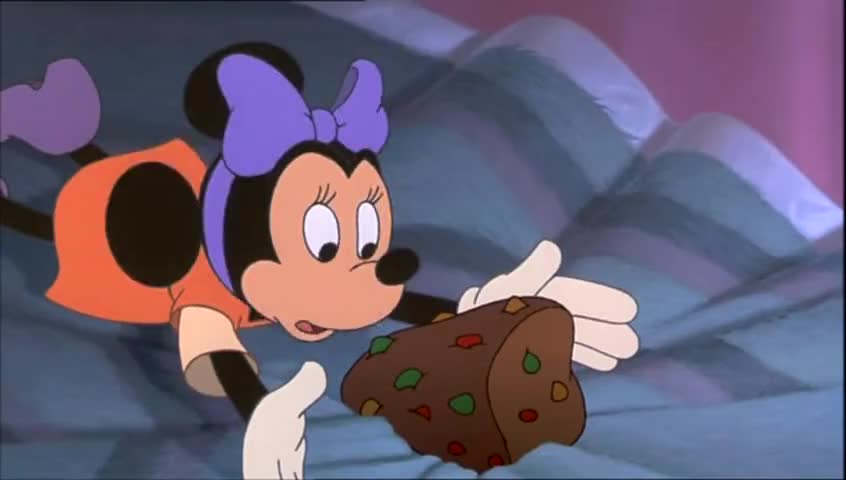
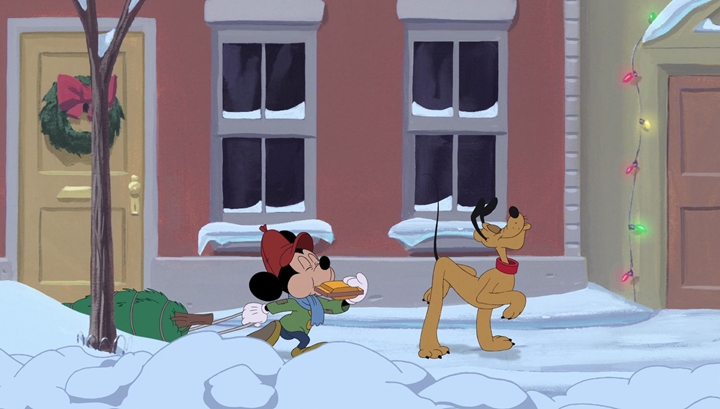
    Mickey and Minnie are working hard to make ends meet, Mickey selling Christmas trees and Minnie in Mortimer’s (a department store). Both Mickey and Minnie, in an effort to buy something for each other, are swindled out of their hard earned money, with Mickey’s boss Pete stealing his tips and Minnie’s Christmas bonus presented in the form of a fruit cake. That can’t be legal, can it??

    Christmas is now up in the air.

    Key thing to note here is Mickey’s harmonica. He takes it everywhere with him to get a bit of extra cash and he is incredibly talented. SO talented that the toy drive hire him on the fly to support the band and raise donations. Ok, so remember: Mickey LOVES his harmonica. It brings JOY to him and to others.

    Before the day is up, Mickey rushes to the jewellery store to buy Minnie the necklace he has been eying up for her. Unfortunately, the owner closes up the shop.

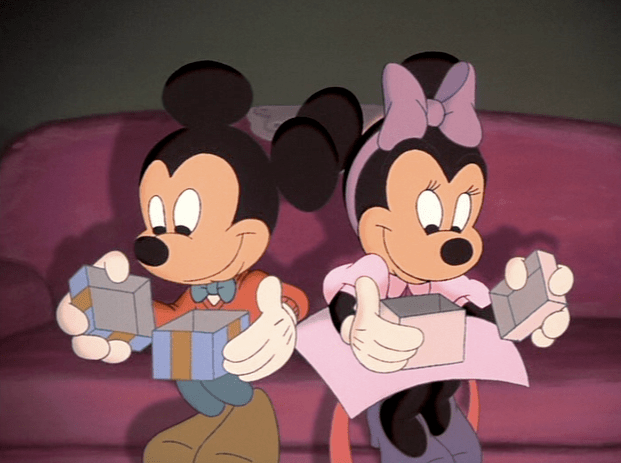
    When Mickey and Minnie reunite to exchange presents by the fire, Minnie gives Mickey a harmonica case. She reveals she exchanged the watch Mickey had bought her the year before in exchange for the case. Then, Mickey presents his gift: the necklace from the shop window. It turns out he won’t have any need for the harmonica case because he traded his harmonica in exchange for the necklace. The end. WHAT?!

    *Stunned silence*

    The pressure of Christmas time?

    Let me collect my thoughts. So, what they’re saying is, is that you should do whatever it takes to buy your partner a present at Christmas time – even if it means giving up on the thing that brings you joy?

    On reflection, does Mickey’s decision to trade in his harmonica show the pressure people feel at Christmas to have something tangible to give to someone? The fear of showing up empty handed. To one up last year’s presents. Perhaps. Even still, you shouldn’t have to sell your pet, your piano, your playstation or take out another deposit on your house just to impress your partner.

    Mickey, you should never have traded in your harmonica. Minnie, you should never have traded in the watch Mickey bought you. That’s not what Christmas is truly about.

    Moral of the story gets a 2/5 from me. It got me thinking, that’s for sure!

    Let me know your thoughts on this ending! Or any other movies you would like me to review!

    *All images belong to Disney

  • Lightbulb writing moments

    Lightbulb writing moments

    Inspiration rarely works to a schedule, but when it shows its beautiful face, whether it’s the middle of the day or night, I rarely pass up the opportunity to write it down. There’s nothing worse than thinking you’ll remember it later, only for later to arrive and the idea you thought you remembered has in fact been forgotten.

    Having a new idea for a storyline is exciting! Everyone’s writing journey is different, but here are a couple of pointers that I’ve found helpful when beginning a new story.

    Write it down!

    Have you ever had a “this could be something!” brainwave? In those moments, I always scribble it down. On your hand, on a napkin, on your phone – wherever works best for you. Could be a quote, dialogue, a plot development, whatever! When you jot it down, you can relax knowing you’ve got the idea while it’s hot, instead of microwaved and partially remembered in a couple of hours. You might not need it now, but in years to come, you might look back on it and find it’s the hidden gem you’ve been searching for. Just write it down and thank your future self later.

    Do a rough draft

    Nothing fancy, just have a go at writing the story or a plot outline. You don’t have to have all your metaphors, character names and descriptions figured out now. You don’t have to have all plot holes sorted. Remember, this is the bare bones. We’re simply free writing our way through the story, meandering towards the climax and meeting new characters and workshopping what could happen. We’re going: “cool, maybe this could happen … and then this … what about this? … hmm, maybe this works better …”

    Your first draft of anything will not be the final product. Don’t stress about it being perfect right now. So long as you’ve got the idea down and you’ve had a go fleshing it out, that’s all that matters. It’s a stepping stone. Trust the process!

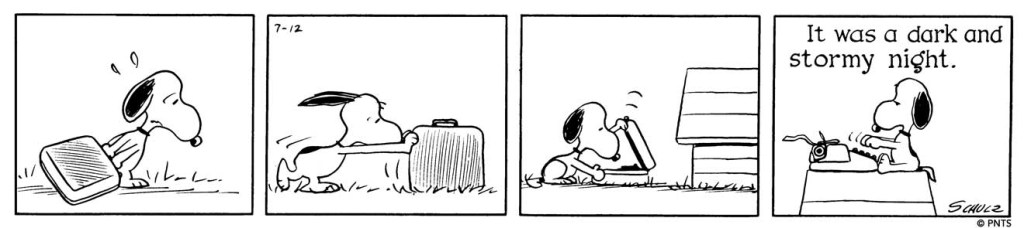
    “It was a dark and stormy night” by Charles M. Schulz (July 12, 1965)

    Take a break

    It’s ok if your story poses many unanswered questions and gaps at the moment. You might have a section where you know what’s going on, a big gap in the middle and a non-existent ending. Or maybe you know exactly how it’ll end but you’re still figuring out how to get there. Or you might be completely stumped.

    Writing is a process – it happens! This is where it can be good to take time away from it and come back to your story with fresh eyes. Like I said, inspiration usually strikes when we aren’t writing. You might come across the answer to your plot conundrum when you’re out for a walk or going shopping! So, don’t stress if your story is feeling a bit like a patchwork quilt right now. Or a piece of Swiss cheese.

    Hopefully this helps you as you write your story! Give it a go, and if you’ve got any other tips or tricks, let me know! Happy writing folks!

  • Trying to write a book in your twenties

    Trying to write a book in your twenties

    Life is one big juggling act. Between family, university, working, going to the supermarket – it’s no wonder we’re all so tired.

    It’s one thing to think about writing a book, but when it comes to actually writing one, well, that’s the challenge. Writing a book is not a one step process. Far from it. So, how do people write books amidst their busy lives?

    This is my advice to you, as a twenty-something who is currently trying to factor in that all important writing time.

    Chip away at it when you can

    If you’re writing a book or have a couple of projects on the back burner, it can feel like there’s not enough time in the day. Your writing time contends with all the other stuff you’ve got going on.

    Sometimes you’ll get a day off and all you’ll want to do is relax – not write. I get that. Some days you just aren’t in the right headspace.

    My advice is to tinker at your writing when you get the chance. If you have a holiday coming up, when could you slot in some writing time? When, during your busy week, can you factor in writing time? Even if it’s not huge chunks of your week, little bits here and there can help you track towards your writing goals.

    Business, business, numbers

    Your book is both your passion project and your mini business project. Shifting your mindset can help you reframe the way you see your book as both your treasure and a product. This can help you to …

    Plan a realistic plan

    Set some realistic goals for writing and sending off your book. Factor in time to think long term. You might consider:

    • Where is my book now?
    • Where do I want my book to be at (insert specific time)? Halfway finished? Finished draft?
    • What steps do I need to take to get there? E.g. allocating this amount of time per week/month to writing etc.

    And then, somewhere down the line, consider…

    • Who do I want to send my book to?

    Do your research. Look up the publishing houses and the agents. Write a big list. Yeah, it’s a lot and it’s quite daunting, especially if you’ve never published before. Here is a great resource from Penguin to get you started: https://www.penguin.co.uk/company/work-with-us/getting-published

    I get by with a little help from my friends

    Yup, writing isn’t really a team sport, it’s more like golf, but even golfers have a support network to coach and guide them. It’s the same for writing, which can be lonely, so get your friends, family, a writing group or your work colleagues on board.

    Support comes in different forms. It might be getting advice about your book’s structure or plot. It might be checking in with your goals. It might be understanding days when you turn down hanging out to write, or helping you take a well deserved break. So, while you’re the one physically writing the book, you’re never really doing it alone.

    Remember your ‘why’

    Writing a book is a swirly up and down journey. It’s a joy and you write because you have a story to tell. All I can say is good luck and keep tinkering!

    Cover art: woman working multitask activities by Freepik