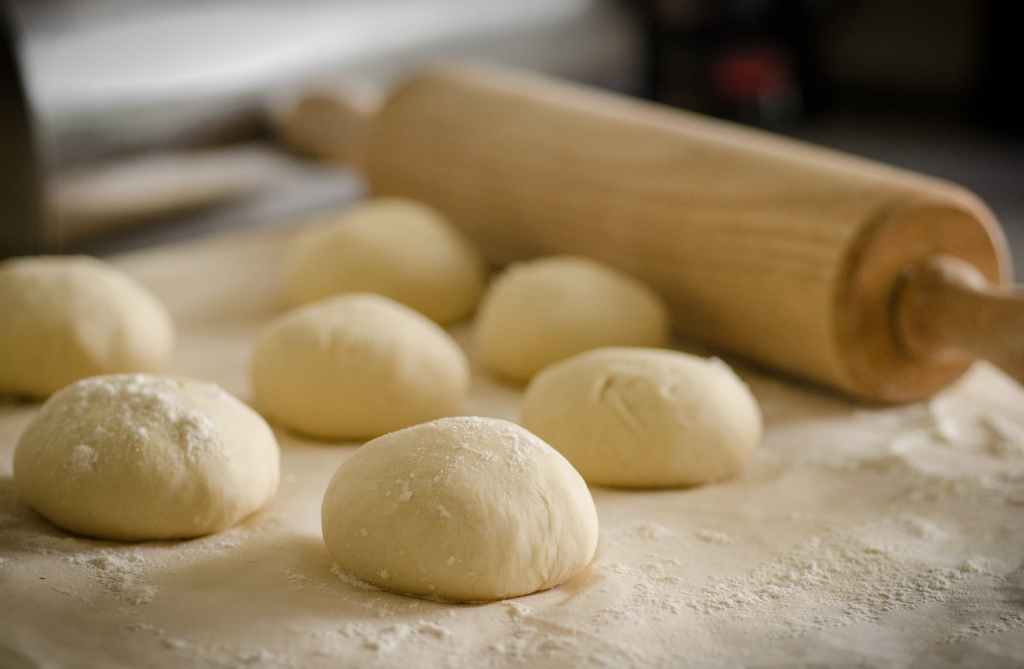
Well, when I say yeast doesn’t work, that’s not strictly true. Yeast does work but under very strict circumstances. Essentially, yeast is an organism that makes your bread rise and taste good. It does this by eating sugar in a nice warm environment, like me of an evening. This way it releases carbon dioxide, puffing up your dough.
However, yeast is not obligated to help you. When you ask yeast to make your bread rise, it spins around to face you in an intimidating chair. Under the glow of a dimly lit lamp, it asks “what’s in it for me?”. You nervously offer sugar, warmth and a great space to expand, and it’ll either wave its hand dismissively, as if to say ‘that’s nothing special’, or give a nod and shake your hand.
A fickle friend
Out of all the times I’ve used yeast when trying to make bread and buns, there is probably a 1 in 10 chance of success. You might read the recipe word for word and follow it step by step but if the yeast doesn’t co-operate, then it’s game over. Yeast is a helper and a hinderer. A giant hurdle, more like. You could have the warmest kitchen in the world and your yeast still might give your dough a miss.
Now, I will admit that I am no seasoned baker. I am an enthusiast who bakes occasionally because it’s therapeutic and I have a sweet tooth. However, when a recipe requires yeast, it strikes fear into my heart. That therapeutic feeling you had? Gone. And as for that oven you were preheating … well, let’s just switch that off. There’s nothing more disappointing than when you spend all morning baking (or all day even) and you’ve got nothing to show for it except a giant pile of dishes. Ah, the joys of baking.
Don’t get me wrong, yeast is amazing. Those tiny brown beads have given us bread and beer and soy sauce! It’s a bit like magic, which is cool when it works, but cringe when it fails.
My advice when working with yeast:
- Just don’t.
No, I’m kidding. Try this instead:
- Make sure you’re using the right yeast
Yes, there is more than one and no, they do not all get the job done the same way. According to Google, there are four different types of yeast including active dry yeast and instant dry yeast. So, make sure you’ve got the right one for your recipe! I wish I had’ve known that earlier on, but unseasoned, unprofessional baker, remember?
- Lukewarm is your friend
If you’re adding milk to your dough, make sure it isn’t cold or boiling hot. Milk needs to be warm because if it’s cold, the yeast will not do anything and if it’s too hot, there won’t be any yeast leftover to do anything. Make sure the milk is lukewarm so that the yeast feels like it’s in a nice relaxing bath.
- If all else fails, at least they sell bread in the shop
What more can I say?
 rebekah writes stuff.